
Sachse Previous Residents by Era
Each source covers a different slice of an address history. The deed chain follows ownership, while regional books and census records can provide period household clues. Sachse does not have a verified long-running standalone city-directory series. The strongest local printed trail is regional, and each edition must be checked for its actual coverage. Begin with the source nearest the date in question, then use the legal description to keep the address consistent as the trail moves backward.
| Source | Years it covers | Where held | What it can show |
|---|---|---|---|
| Collin Historical Records | 1843–1975 | Collin County official-records portal | Historical instruments and legal-description matches |
| Dallas official records | Current portal; oldest online year unstated | Dallas County Public Search | Grantor, grantee, subdivision, type, number, and date |
| Dallas County tax rolls | 1846–1910 microfilm ranges | TSLAC and Dallas archive routes | Taxpayer and property context, not a full household list |
| Sachse-area regional directories | 1990–91, 1993, 1998–99, 2005–09 | Dallas Public Library | Subscriber and address leads for a specific edition |
| UNT local newspapers | 1948–2011 | Portal to Texas History | Obituary, notice, community, and address clues |
| Federal census | Public under the 72-year rule | NARA, FamilySearch, and library databases | Decennial household snapshot |
| Sachse permits | SmartGov from July 8, 2025; older range unstated | City portal and request route | Project, jobsite, work, and inspection timing |
A deed can connect an address to an owner, while a reverse directory or census may connect a period address to a listed household. Neither source alone proves every person who lived there. Note: A source's listed years describe its available research span, not an assurance that every Sachse address appears.
Anchor Sachse Previous Residents to Legal Description
Before searching names, copy the current situs address, parcel or geographic ID, subdivision, lot and block, or abstract from the applicable CAD card. The legal description is the land language used by CAD and deeds. It is more durable than a street string, which may be abbreviated, retyped, or absent in an older index. Sachse sits in Dallas and Collin counties, so this first step also identifies the clerk branch that owns the deed trail.
The city subdivision map shows the county line and named phases, but the reviewed official sources did not locate a dated Sachse-wide renumbering or renaming guide. Do not invent one from a no-result. Instead, compare a historic street guide, plat, lot and block, abstract, and CAD geographic ID. A postal label, ZIP, city limit, and county records branch can all differ without a record being wrong.
Start Sachse Previous Residents at CAD
Dallas CAD and Collin CAD provide the current appraisal card that starts a backwards address trail. Useful parcel-card families include the property or geographic ID, situs, legal description, abstract or subdivision, owner name, agent, mailing address, exemptions, values, building details, and taxing entities. The owner shown is a recorded tax-roll owner. A mailing address is for correspondence and may belong to a trust, representative, business, or owner who lives elsewhere.
Use the current owner's name as a deed-search lead only after comparing the property description. A homestead entry is evidence of an exemption claim, not conclusive proof of occupancy. Renters and other household members generally do not appear in the appraisal roll. The full current address chain is treated in the Sachse Street Directory, while the work here moves from the parcel into earlier periods.
Trace Sachse Previous Residents Through Deeds
A grantor is the person or entity transferring an interest. A grantee receives it. The chain of title is the sequence of recorded transfers for the same property. Start with the current CAD owner as a grantee near the purchase date, then read the matching instrument. Record the instrument number, recording date, grantor, grantee, legal description, and any prior-instrument reference shown. The seller then becomes the next grantee name to search for an earlier acquisition.
- Find the correct county CAD card and copy the legal description before running a name search.
- Search the current owner as grantee around the likely purchase period in the appropriate county index.
- Open the index result or image and confirm that its lot, block, subdivision, or abstract matches the parcel.
- Search the named grantor as an earlier grantee with the same legal-description language and a sensible date range.
- Repeat each verified transfer. When the chain enters probate, foreclosure, estate records, or an older deed book, move to the clerk, archive, library, or microfilm route.
- Grantor
- The party transferring property in a recorded instrument.
- Grantee
- The party receiving property in that instrument.
- Chain of title
- The verified sequence of ownership transfers for one legal parcel.
- Legal description
- Lot, block, subdivision, abstract, or metes-and-bounds language that identifies land beyond the street address.
Collin Historical Records for Sachse
Collin County offers a real historical boundary that makes it an important Sachse previous-residents route. Its Other Services area includes Historical Records for 1843 through 1975, alongside current land records. County instructions tell researchers to use the CCAD property address to get the legal description, enter the owner name, sort by recorded date, scroll to the approximate purchase year, and match the legal description. A result opens as an unofficial-watermark document; a printable PDF follows the portal's cart, registration, and payment process.
Plats can also be searched by subdivision or plat name. When a street string does not carry backward, the plat and legal description often do. A historical instrument is an ownership trail, not an automatic record of every past resident.
Dallas Gaps in Sachse Deed History
Dallas County Public Search supports grantor or grantee, subdivision, document type, document number, and date searching. Its official portal does not state the oldest year available online or the exact imaging cutover. That is an honest online-start gap, not a reason to state a made-up start year. Search the public index first, then use the Dallas County Clerk, county records desk, written request route, Dallas Public Library, TSLAC microfilm, or FamilySearch when the expected transfer predates the available online material.
The Dallas History & Archives page identifies directories, newspapers, maps, and county-record resources that can support the fallback work.
This archive route matters when a Dallas index search ends before the period needed for an address history.
Sachse Previous Residents in Regional Directories
Dallas Public Library holds the regional sequence that can place past residents near an address: Southwestern Bell books for 1990–91, 1993, and 1998–99; an area-wide Garland, Rowlett, Sachse, Wylie book for 2005–06; and Wylie, Sachse, Murphy books for 2005 and 2007–09. The library also has Dallas cross-reference directories with selected coverage from 1936 through 2019, though Dallas proper volumes must not be represented as a complete Sachse roll.
Use a street guide or reverse section to obtain an address-to-subscriber lead, then check the alphabetical section for the same edition. A missing entry can indicate a coverage gap, unlisted service, OCR error, or a move. Directory runs and access details belong to the Sachse Directory Book, which provides the historical shelf rather than substituting an unsupported citywide list.
The UNT Wylie-Sachse date browse is a period search route for the local newspaper layer.
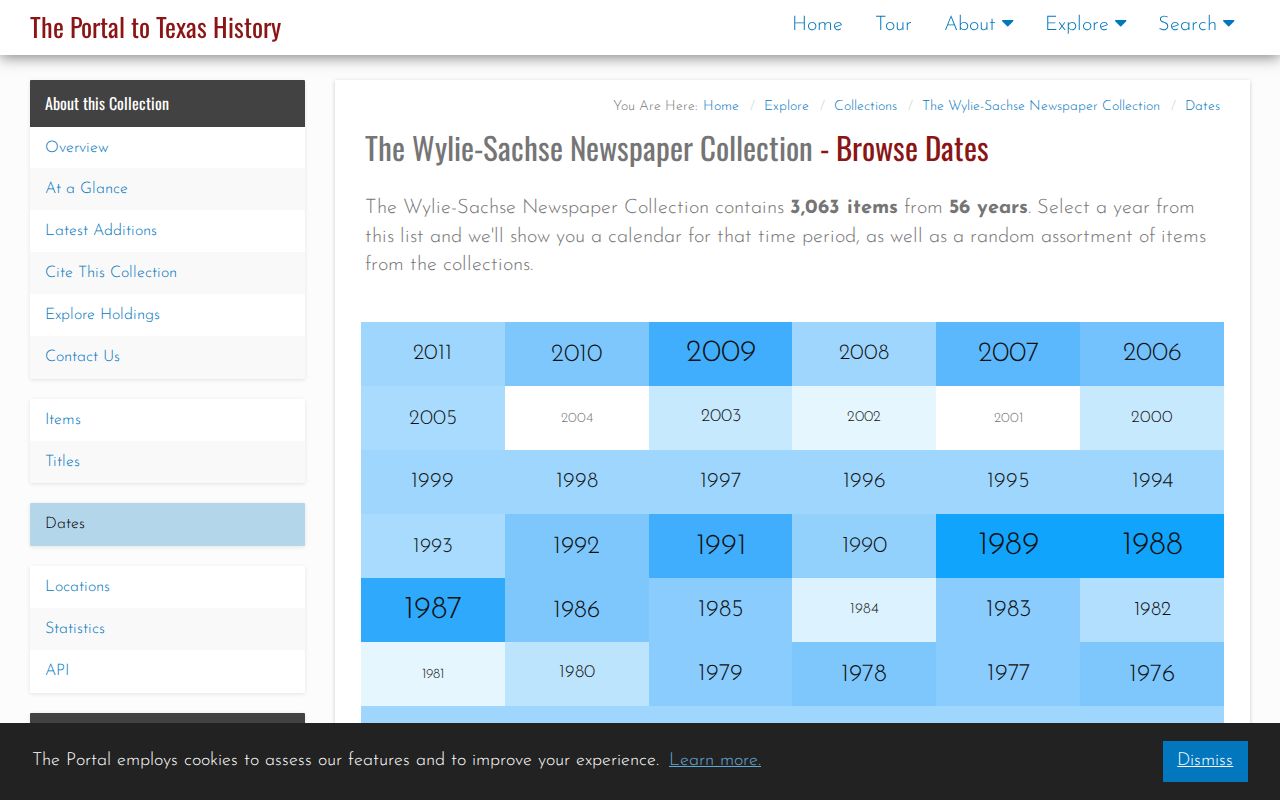
The date browser helps pair a deed or directory interval with local notices, while OCR spelling still needs visual checking against a scan.
Sachse Previous Residents and Census Years
Directories provide an annual or near-annual address clue, while a census is a household snapshot taken once each decade. Under the 72-year rule, 1950 is the latest public federal census as of 2026. It is not a 1960 source. County and city boundaries, spelling, and street forms may also differ from the current Sachse address, so the legal description and historic geography should stay with the search notes.
- Place a verified deed or directory result in a narrow time range for the address.
- Choose the available public census nearest that interval, then search by household names, township, county, and nearby geography.
- Compare relationships, ages, birthplace, and location with the address clue. Do not assume that a census name alone is the same person.
- Use an obituary, probate filing, deed, or newspaper notice to test a transition into or out of the address.
Texas State Library and Archives indexes can help identify vital-event leads, but an index is not a certificate or a complete address record. The Texas State Library vital-index FAQ explains the historical route and access limits.
Vital and obituary clues can close a family-history trail, but protected records and sensitive attachments should remain private.
Sachse Heir Trails After an Address
An address history can be useful in family and estate research when a recorded transfer, obituary, and probate reference point to the same legal parcel. A deed may name a personal representative, while an obituary can identify family context and a probate record can provide the estate route. Treat each item as a lead until its dates, county, and legal description agree. Protected family attachments and sensitive details should not be copied into a personal address history.
Dallas County and Collin County records need the same county check used for deeds. If an estate record moves the property, follow the instrument and legal description, not an assumed relationship from a shared surname. Note: Probate or obituary evidence can explain a transfer, but it does not make every named person a prior occupant.
Sachse Previous Residents on Maps and Permits
Sanborn fire-insurance maps can document building footprint, use, street names, and infrastructure if a place was mapped. The Texas index covers 1877 through 1922, but no Sachse-specific sheets were located in the reviewed index. That is a map-context gap, not evidence that a building did not exist. Use a county plat, historic street guide, deed legal description, and local archive material alongside the map index.
The Texas Sanborn map index is the starting place for this building and street context.
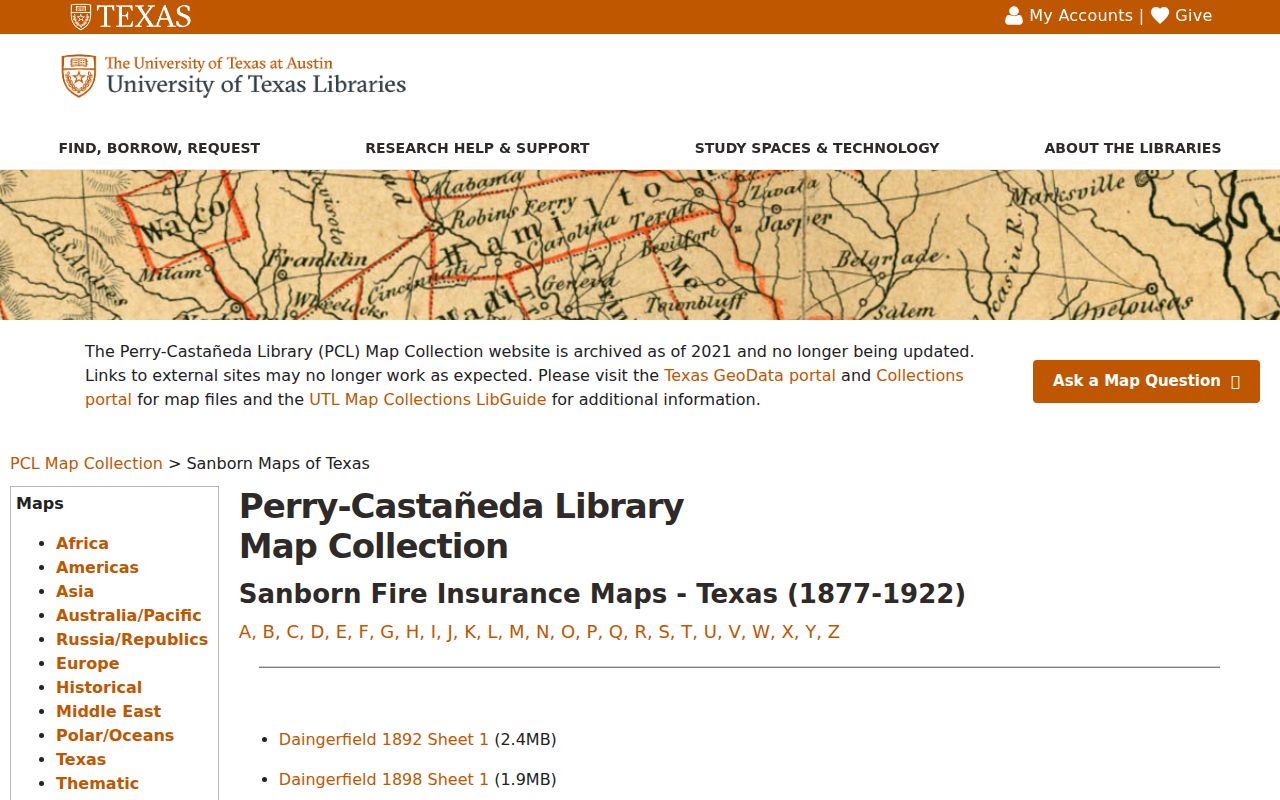
The index establishes where to look for mapping coverage without turning the absence of a Sachse sheet into a false negative.
Sachse began using SmartGov for new permits on July 8, 2025. A permit can date an addition, roof, pool, remodeling work, or inspection. It does not prove that the applicant occupied the address. SmartGov's contractor site location is a business address, so the jobsite field is the address that belongs in a property trail. Older files may need a request for existing city records.
Sachse Previous Residents Address Gaps
When a past address does not search cleanly, stop before merging it with a similar street or same-name person. Check the county branch, street spelling, lot and block, abstract, subdivision name, and date window. Dallas and Collin both predate modern Sachse, and early records can appear under county, farm, church, or family terms instead of an incorporated city label. There is no verified local courthouse-loss story that explains every missing record.
Lawful use. Sachse previous-resident research is appropriate for house history, family history, and personal curiosity. Do not use findings to stalk, harass, or harm a living person.
For a real dead end, use the recorded-document route, clerk counter, Dallas Public Library microform staff, TSLAC, FamilySearch, the Sachse Historical Society, or the UNT newspaper archive. Preserve the difference between a verified transfer, a listed subscriber, and an informed lead.