
What Sachse Records Confirm
A careful name search joins different Sachse records, because no office keeps one complete resident roll. A current appraisal card can identify the recorded owner, parcel, situs address, mailing address, and legal description. A deed can place a name in a transfer. A voter result speaks only to registration. Court, vital, probate, and historical sources each answer a narrower question. First identify whether the Sachse address falls in Dallas County or Collin County, then use that county's appraisal district, clerk, and court route.
| Record | What it can confirm | Sachse keeper | Access route |
|---|---|---|---|
| CAD parcel card | Recorded owner, situs, mailing address, exemption, and legal description | Dallas CAD or Collin CAD | Free public property search |
| Deed index | Grantor, grantee, instrument, recording date, and legal description | Dallas or Collin County Clerk | Public index; image and copy rules vary |
| Voter record | Registration status, VUID, precinct, district, and polling details | Texas Secretary of State | One-person lookup, subject to protections |
| Court docket | Party, case number, case type, events, and posted disposition | Municipal, county, district, appellate courts | Index and clerk-file access differ |
| Vital or probate trail | Event pointer, decedent, estate role, heir, or transfer clue | DSHS, clerks, library, and archives | Index and certified-copy rules differ |
Use a property or deed trail when the question is ownership. Use registration only to confirm a lawful one-person voter match. For a family-history question, probate, obituary, and deed evidence may fit better than a current name search. Each result needs a second independent check before it is treated as a match.
Sachse Record County Branch
Sachse crosses the Dallas and Collin county line, so the city name does not select the right clerk or court. Start with Dallas CAD or Collin CAD to establish the parcel's county and legal description. The appraisal card's situs is the physical parcel address. Its mailing address is correspondence for the tax account and can belong elsewhere. Neither one alone proves current occupancy.
On the Collin side, the clerk's Historical Records mode covers 1843 through 1975. On the Dallas side, the public official-records portal is an online index, but its exact historical start is not stated. The county split is also important for court work: Collin Judicial Search and Dallas County's record-search routes retain separate coverage and clerk fallbacks. A city label, ZIP label, school zone, and county record branch can point to different systems.
Note. Record the county, parcel number, legal description, and date range before comparing two Sachse name results from different portals.
Sachse Voter Record Check
The Texas Secretary of State's My Voter Portal is a one-person confirmation tool, not a citywide directory. It requires the legal spelling of the name, the correct county, date of birth, and ZIP. For a Sachse address, choose Dallas or Collin only after verifying the county branch. A no-match can reflect a spelling variation, recent move, status change, wrong county, ZIP or date of birth, or a protected registration. It does not establish that a person never lived in Sachse.
| Portal field | How it is used |
|---|---|
| Last Name and First Name | Required name fields; use the legal registration spelling and add a middle initial only as a match aid. |
| County | Required dropdown; select Dallas or Collin rather than assuming the city controls the result. |
| Date of Birth | Required identity-matching field. |
| ZIP Code | Required five-digit registration field, not a public ZIP-wide browse filter. |
Results may show a registrant name, VUID, status, precinct, county, districts, and polling or election information. Ballot choices are not displayed. SSN, Texas driver-license or ID data, and qualifying protected addresses are confidential. Texas also advises that restricted-public-access status can suppress a qualifying person from the public lookup.
Sachse Court Party Match
Search the applicable county court index with the name and any verified name variant, then read the case type, filing date, party role, and posted disposition. Collin Judicial Search covers active district, county-court-at-law including probate, and justice-court matters. Its documented online coverage begins in 1984 for civil and probate matters, 1988 for district criminal, and 2000 for county criminal. Older manual sources remain available by record type, including pre-1984 civil and probate materials. A visible party row is an index lead, not proof of identity, residence, or outcome.
The Collin County Judicial Search screen is shown below. Its documented routes make the county choice, case type, and date range essential parts of a careful Sachse name match.
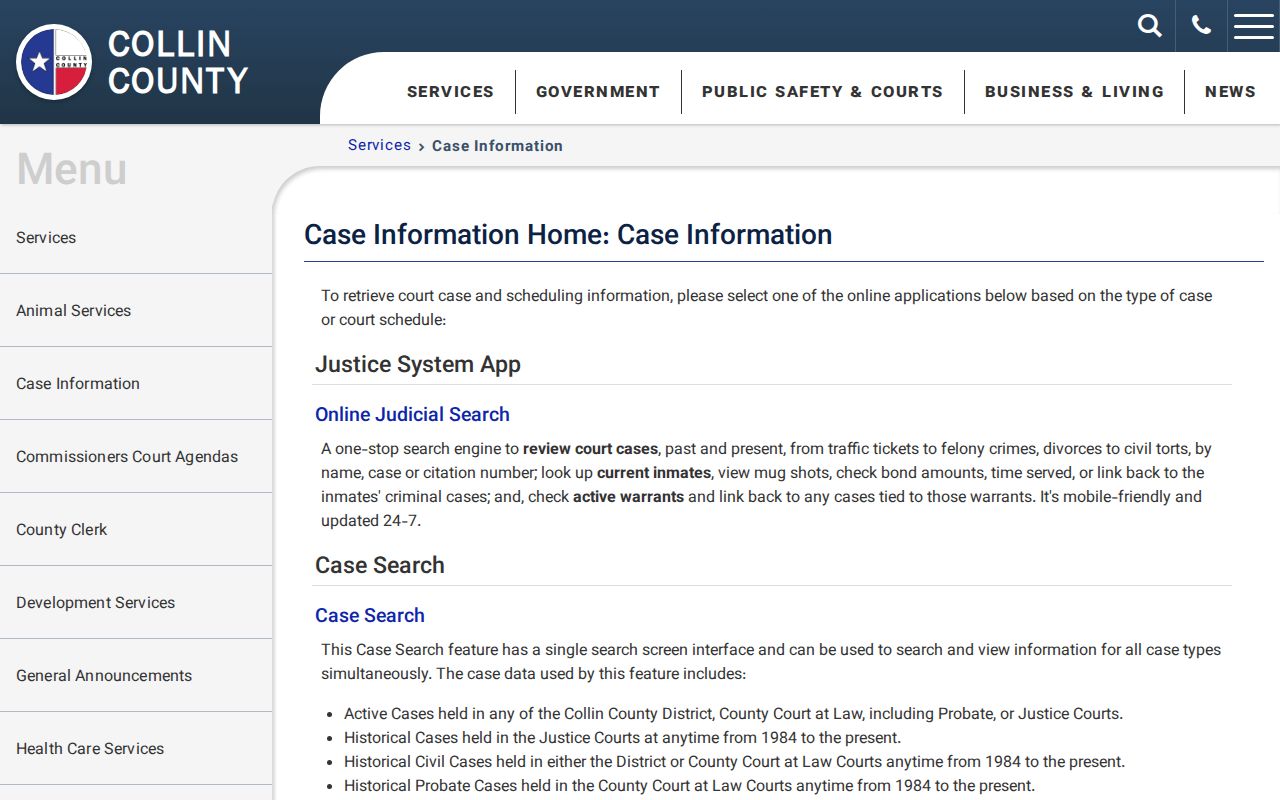
Use the result to decide whether a clerk-held file or manual record needs a follow-up, and do not join same-name parties without corroborating facts.
Dallas Odyssey Smart Search accepts a record number or a name in Last, First Middle order. Its advanced hearing search includes location, hearing type, search type, Sounds Like, criteria, and hearing-date controls. Dallas replaced its mainframe with Odyssey in May 2023 and converted felony cases back to 1968, with possible conversion errors. Missing or malformed converted rows should be checked with the clerk rather than treated as a historical conclusion.
| Court result field | What to compare |
|---|---|
| Case or record number | The unique docket reference for a clerk follow-up. |
| Party and role | Full name and whether the person is a party, attorney, witness, or another listed role. |
| Case type and dates | Venue, filing date, hearings, and the time period tied to the person. |
| Disposition or event | Posted outcome or docket event, which must be read in context. |
Sachse Appellate Record Route
For an appellate matter, Texas TAMES is the state appellate search, not a substitute for a county trial file. Its captured controls include court, case number, partial case number, civil or criminal type, filing dates, style, attorney or bar number, trial-court case number, county, and trial court. TAMES refreshes nightly. re:SearchTX is the statewide public route for trial documents, but confidential material remains unavailable and the clerk still holds the controlling file.
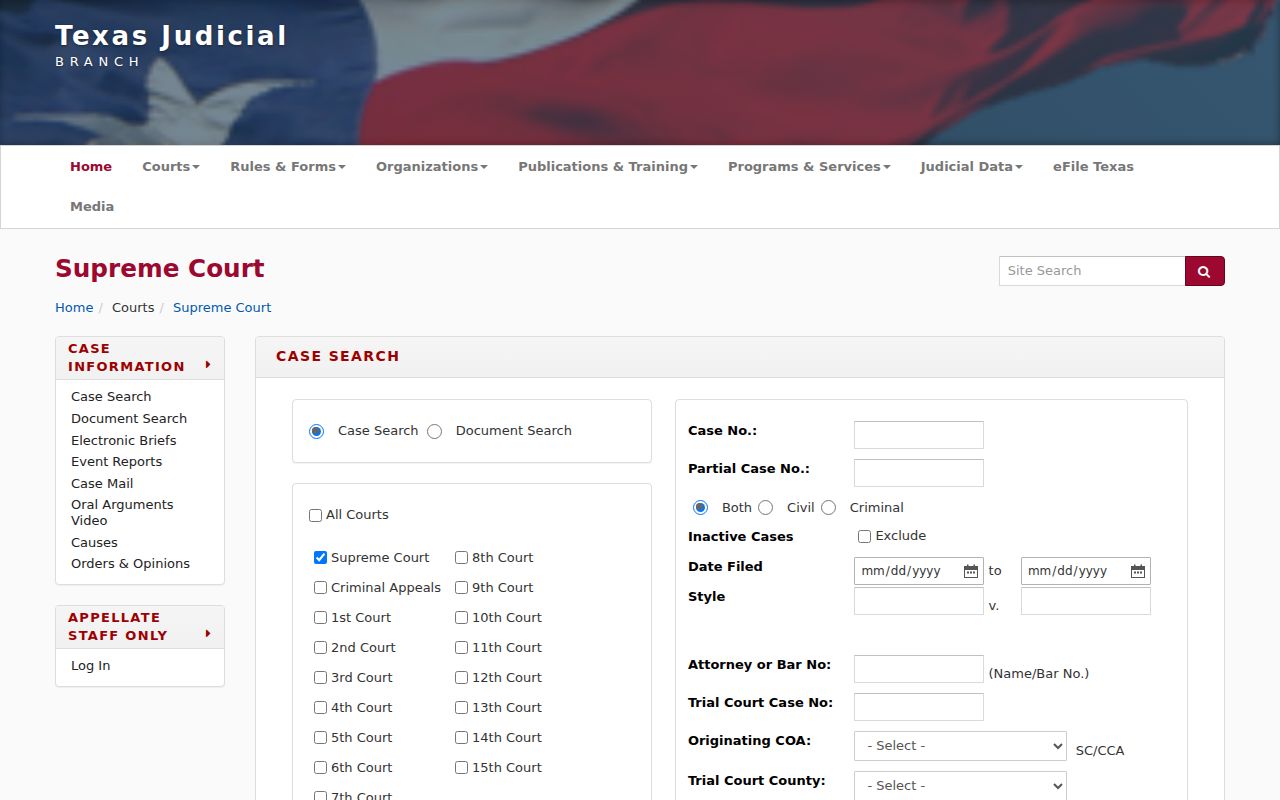
The appellate screen helps separate an appeal from the underlying Dallas or Collin trial case, so the county clerk remains the next stop for a complete record.
Sachse Vital Record Windows
Birth, death, marriage, and divorce records do not carry the same public window or the same proof value. Texas closes birth records for 75 years and death records for 25 years under Tex. Gov't Code §552.115 and 25 TAC §181.1. State marriage indexes begin in 1966 and divorce indexes in 1968. A state marriage or divorce verification is not a certified county marriage license or district-court divorce decree. The holder of the certified document is the county clerk or district clerk, while DSHS provides the verification route.
The Texas OVRA portal handles Texas birth and death certificates or verifications, plus marriage and divorce verifications for eligible adult applicants.
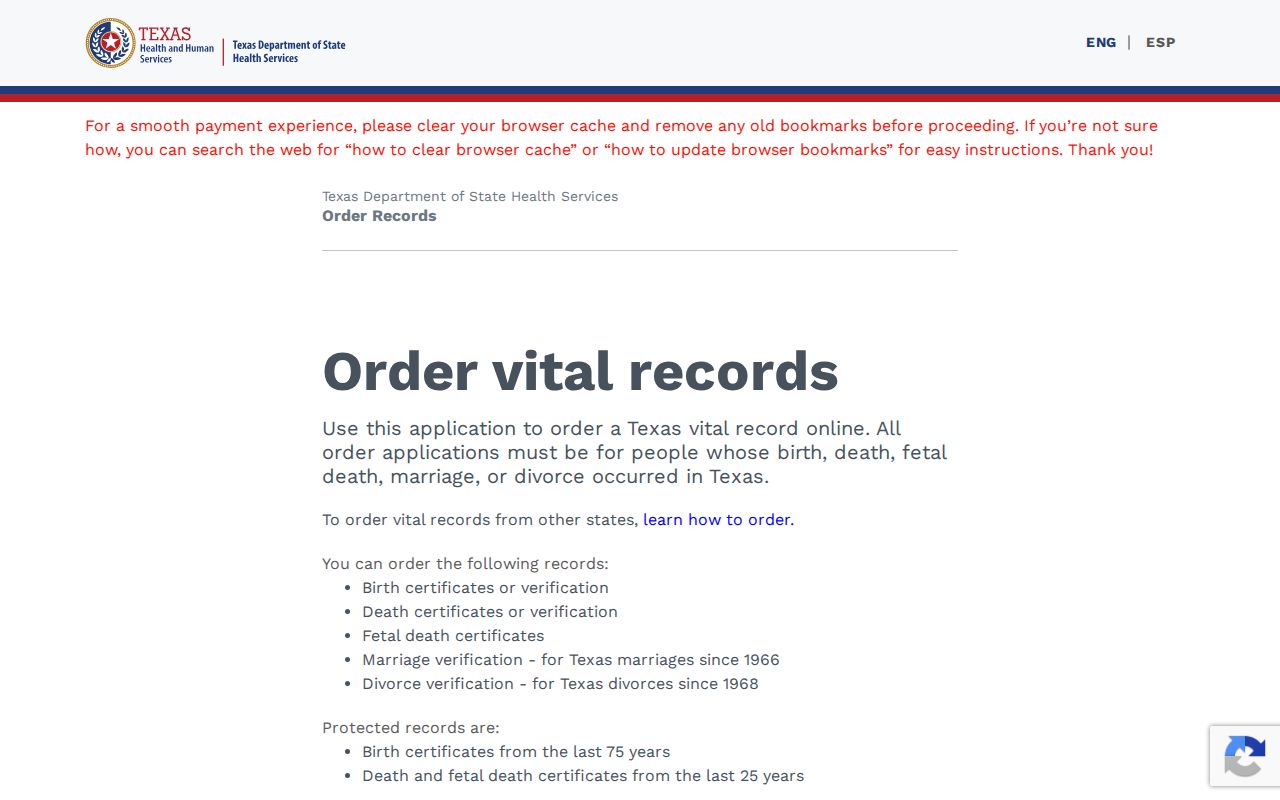
Online orders collect identity, record, and payment details; DSHS reports that most online orders take 20 to 25 business days, while most in-person orders are same day or may take 24 or more hours.
An index can point to a date, county, name, sex, or event. It cannot establish a full street address, relationship, or legal status. Order a certified copy only from the proper custodian and only when eligibility rules apply. Use the current DSHS fee page, because an older marriage/divorce form contains older fee language.
Sachse Resident Heir Trails
An heir question needs a different Sachse record path. Begin with the county probate or court filing, then compare deed transfers and obituary notices. An executor, administrator, heir, witness, attorney, and creditor are not interchangeable roles. The title in the filing and the legal description in a related deed help show whether an estate record concerns the right family and property.
Dallas Public Library genealogy resources, the Sachse/Wylie newspaper archive, and county filings can provide historical context. Obituaries and newspapers are useful clues, not certified proof. Texas adoption information follows confidential adoption-record and official registry or confidential-intermediary processes; no current official public birth-parent workflow was located, so a public name search should not be promised for that purpose.
Verify a Sachse Record Match
Make the Sachse search a comparison task. A parcel card may anchor a recorded owner to a legal description, but it does not prove who lives at the address. A voter result may confirm registration, but not every household member. A court party may be connected to a case rather than to Sachse. The goal is to find two independent sources that agree on the person, county, date range, and relationship to the address or event.
- Confirm the Dallas or Collin county branch with the parcel and retain the situs, mailing address, and legal description separately.
- Search the name and documented variants in the applicable court index, comparing case type, role, filing date, and disposition.
- Use a lawful vital index, deed, probate record, obituary, or historical source only for the question it can answer.
- Request a clerk-held file or certified record when an official copy is needed, rather than treating an index row as final proof.
- Docket
- A court's running case record, including filings, hearings, and events.
- Index versus image
- An index points to a record; an image is the document view, which may have access or copy conditions.
- Certified copy
- A custodian-issued copy that carries official certification and may require eligibility, identification, and payment.
Sachse Record Request Route
When an online Sachse search stops, ask the office that holds the existing record. The Texas Public Information Act, Tex. Gov't Code ch. 552, generally opens public information held by a governmental body subject to exceptions. Sachse asks requestors to describe existing documents, rather than pose a question or ask staff to perform research. The city offers JustFOIA, email, mail, in-person, and fax channels, and says estimates are provided when charges exceed $40.
For a county deed, marriage, probate, or court record, use the clerk index first, then the counter, public terminal, phone routing, written copy request, archived manual books, library, or TSLAC microfilm as the date requires. The PIA is not a replacement for a county clerk's record-specific route. It is a way to request identifiable government documents that are not otherwise available online.
Sachse Record Privacy Limits
A Sachse record search has firm boundaries. Qualifying voters can use protected or substitute addresses. The OAG Address Confidentiality Program provides a substitute mailing address for eligible survivors and is not a public lookup. Tax Code §25.025 offers qualifying property owners an appraisal-address confidentiality process, while Property Code §11.008 can support redaction of specified information from online official-record instruments. DMV personal information is restricted by the federal Driver's Privacy Protection Act.
Birth and death closure periods, sealed or expunged court material, juvenile records, protected victim data, and confidential family details also limit what an index shows. If a source record is wrong, seek correction from the custodian that created it: CAD, county clerk, voter registrar, court clerk, DSHS, SOS, or the relevant board. A downstream profile cannot correct the official source.
Lawful use. Use Sachse resident records for personal, lawful research and never to stalk, harass, intimidate, surveil, or evade a protected address.
Sachse Custody Record Scope
Custody searches are limited by system and time. The Texas Department of Criminal Justice inmate search concerns current state custody, while the federal locator is a separate federal route. Neither one is a general Sachse search or proof that a person is currently local.
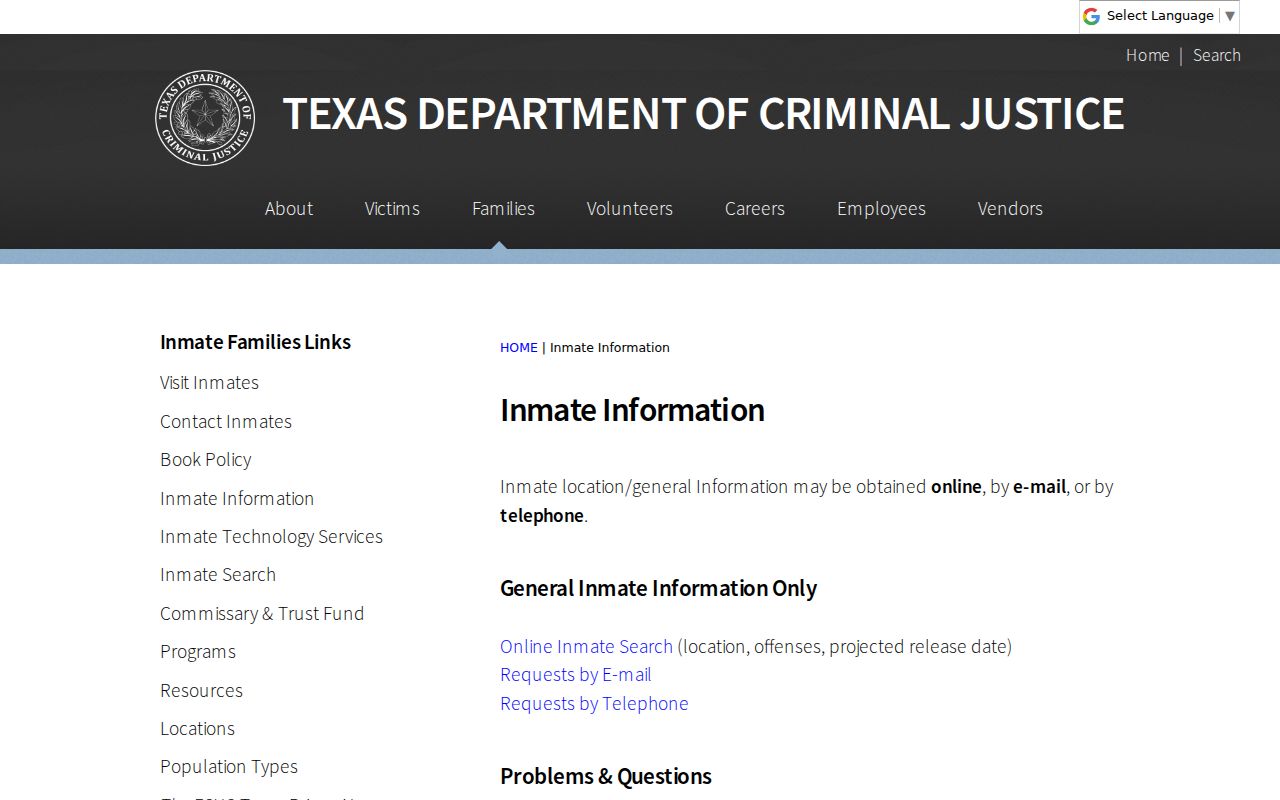
The state search should be used only for the narrow custody question it answers, then verified through the agency's own record and current status information.
The Federal Bureau of Prisons inmate locator serves a different custody system and does not replace Dallas, Collin, municipal, or state case records.
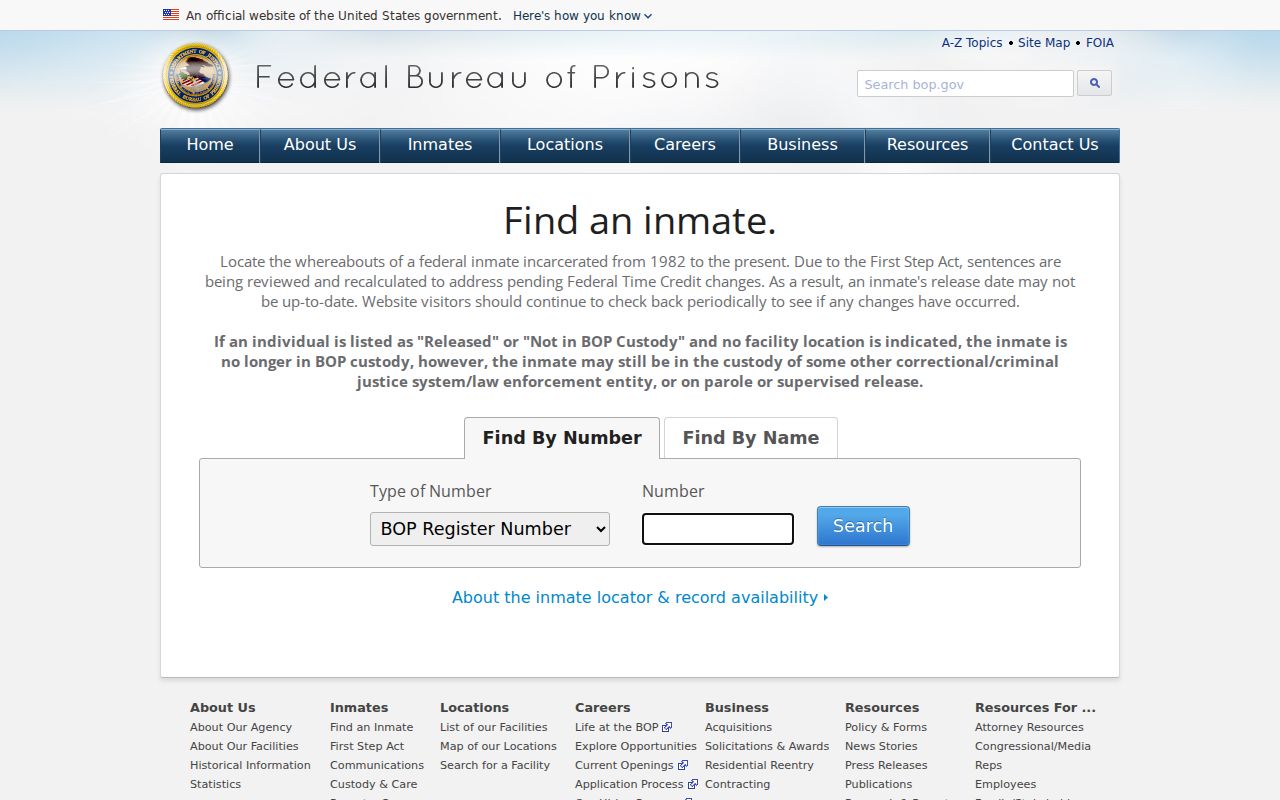
Use the source that has jurisdiction, read the date and status carefully, and do not convert a custody result into a conclusion about present residence.